
Filing Car Insurance Claims: A Step-by-Step Guide for 2025 and beyond
Filing a car insurance claim can feel overwhelming, but understanding the process can save time and reduce stress. Knowing the proper steps will ensure your claim is processed efficiently, whether dealing with a minor or major accident. Here’s a step-by-step guide to filing your car insurance claim in 2025 and beyond.
This article is for general educational purposes only and isn’t legal or insurance advice. Always check your own Certificate of Insurance/Takaful and confirm specifics with your insurer before making decisions.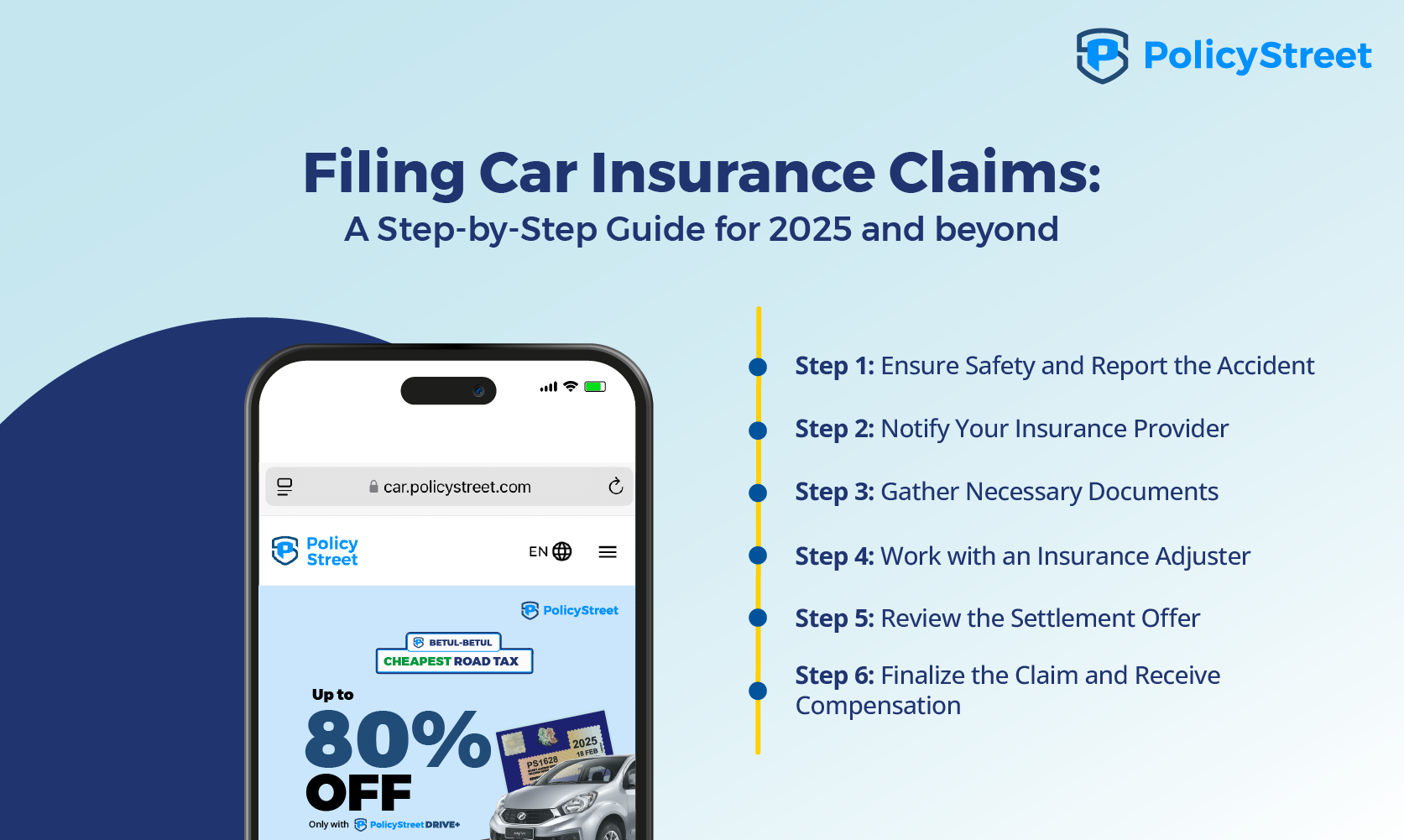
1. Ensure Safety and Report the Accident
Safety is your first and foremost concern after an accident. Move to a secure location and check if anyone requires medical attention. Then, alert the authorities if injuries or significant property damage occur. Be sure to obtain a police report if applicable.
Tip: Take photos of the scene, including vehicle damage, road conditions, and other relevant details. This documentation is essential for your claim.
2. Notify Your Insurance Provider
After the accident, contact your insurance provider as soon as possible. Most insurers allow you to file a claim online, via their app, or by calling their claims department. Be ready to provide:
The date, time, and location of the accident
A description of what happened
Contact details of other parties involved
Tip: Prompt notification is crucial, as most policies require reporting accidents within 24-48 hours.
3. Gather Necessary Documents
To avoid delays, make sure you have all the required documents ready. Commonly requested documents include:
Police report (if applicable)
Photos of damages and the accident scene
Your driver’s license and vehicle registration
Proof of ownership or repair estimates
Tip: Keep all documents organized and detailed to facilitate quicker processing.
4. Work with an Insurance Adjuster
Once your claim is filed, an insurance adjuster, a professional trained to assess the damage to your vehicle and other claims, will take over. They’ll likely approach you for an inspection, which could take place at a repair shop or the accident scene.
Tip: Ask the adjuster about the expected timeline for your claim. If you disagree with their assessment, you can request a second opinion.
5. Review the Settlement Offer
After selecting your add-ons, you must enter your personal details to proceed with the renewal process. Ensure all information is accurate to avoid any delays.
Before accepting, carefully review the offer. If it seems insufficient, provide additional documentation (e.g., more repair estimates or medical bills) to support your claim.
Tip: Don’t rush the process. If you feel the settlement isn’t fair, negotiate or appeal.
6. Finalize the Claim and Receive Compensation
Once you accept the settlement, your insurer will issue payment. The payment may go directly to the repair shop if repairs are required. Sometimes, you may need to pay upfront and be reimbursed later.
Tip: Choose an approved repair shop to avoid issues with reimbursement.
Common Pitfalls to Avoid When Submitting Claims
Delaying the Claim: Report the accident immediately to prevent delays or potential denial.
Inadequate Documentation: Please take clear photos or collect important details to ensure your claim is accurate. Document everything thoroughly.
Not Understanding Your Coverage: To avoid surprises, know your policy details, including what is and isn’t covered.
Assuming the Other Driver’s Insurance Will Cover Everything: Even if the other driver is at fault, you may need to file through your insurer.
Tips for Faster Claims Approval
Submit Documents Promptly: The quicker you submit accurate information, the faster your claim will be processed.
Stay Organized: Keep all claim-related documents in one place for easy access.
Communicate Clearly: Provide concise, complete information to avoid delays.
Follow Up Regularly: Stay in touch with your insurer to ensure your claim progresses.
Conclusion
Filing a car insurance claim doesn’t have to be stressful. Following these simple steps, staying organized, and avoiding common mistakes can ensure a smoother, faster claims process. Remember to report the accident promptly, gather all necessary documents, and communicate effectively with your insurer. These actions will help you get back on the road without unnecessary delays.


