Compare & Renew Your Car Insurance Online
Easily compare and renew your car insurance online with PolicyStreet — the trusted platform for finding the cheapest car insurance in Malaysia. Save time, money, and renew your road tax and insurance in just a few clicks.











Why Choose PolicyStreet




About PolicyStreet
Backed by Khazanah Nasional Berhad, PolicyStreet serves over 10 million customers and has earned multiple regional awards, including Fintech of the Year 2024 at the The Asset's Triple A Digital Awards. Through innovation and transparency, we empower Malaysians to compare, buy, and renew car insurance and other protection plans with ease and confidence.
3 Simple Steps to Renew Your Car Insurance
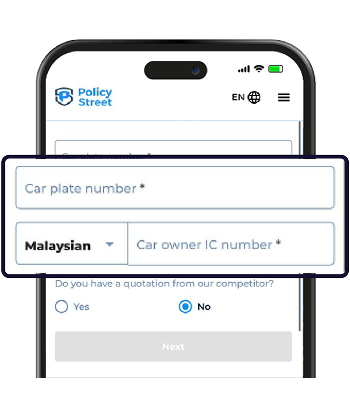
1. Fill in your details
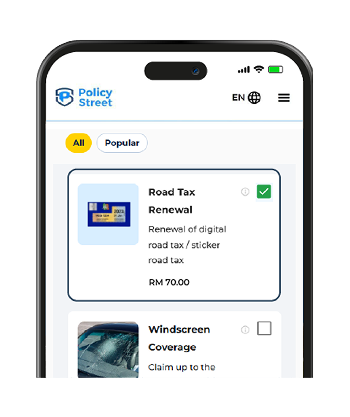
2. Choose your coverage &
add-ons
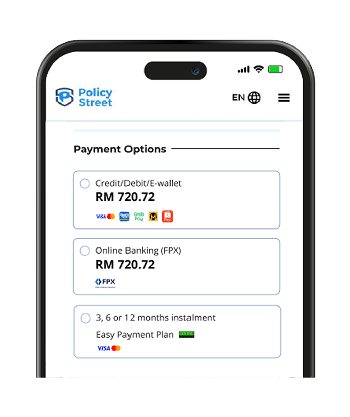
3. Pay & receive your policy
Customise Your Coverage with These Add-Ons
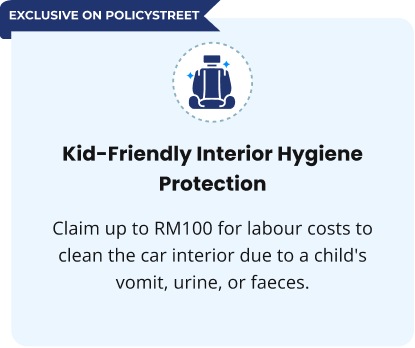
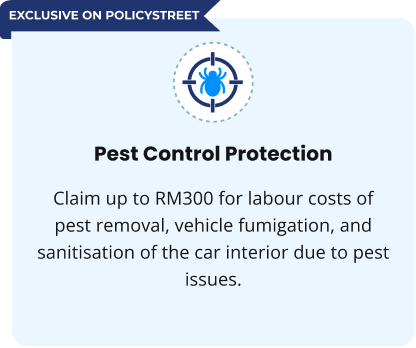
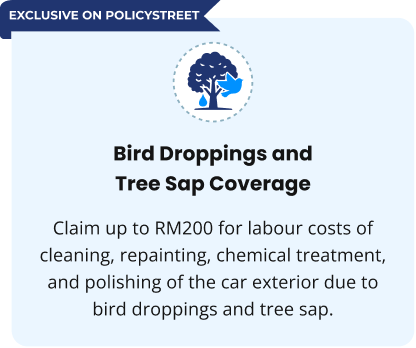
Split Your Payment into Months

Why Renew Your Car Insurance & Roadtax Online




Need a Quick Estimate?
Calculate your car insurance premium or check your road tax cost before purchasing a policy.
PolicyStreet is an InsurTech (Insurance Technology) company that offers affordable online car insurance to consumers and customizable insurance solutions to businesses.
Yes. We are a Financial Advisor licensed and approved by Bank Negara Malaysia.
We are a regional company, and we have 2 offices in Malaysia. Our HQ is located at Menara Suezcap, Kuala Lumpur.
Use our online comparison tool to view quotes from multiple providers and select the best coverage at the lowest price.
Yes! PolicyStreet allows you to renew road tax and insurance simultaneously online without visiting a counter.
Absolutely. All transactions are encrypted and processed securely through trusted payment gateways.
If the payment is made during working hours and all the provided information is accurate and no referred risk detected by the insurer, your policy will be issued within the same business day.
However, in some cases, the insurer may request additional supporting documents - such as vehicle photos or the grant, to verify certain details, which could delay the policy issuance.
Yes! You can select comprehensive or third-party fire & theft coverage to suit your needs and budget.
See What Our Customers Say

We’re the BEST, but don’t just take our word for it. From comparing quotes to getting covered, find out why our customers choose PolicyStreet.
 Read Our Reviews
  Nor Azlianna5/5
I recently renewed my insurance with Policy Street and had an excellent experience. Their customer service was friendly, knowledgeable, and attentive to my needs. Not only did t…
The car insurance and road tax renewal process was smooth and efficient. Their response is fast which take 1 day business working day to get things done. The quoted price is lower than others as well. Love the experience here and strongly recommend PolicyStreet to my friends and family!
 Navinesh Sakthidharan5/5
The most efficient, reasonable and recommended service available. Various payment methods, various promotions and campaigns and most of all, attentive staff and vendors. 10…